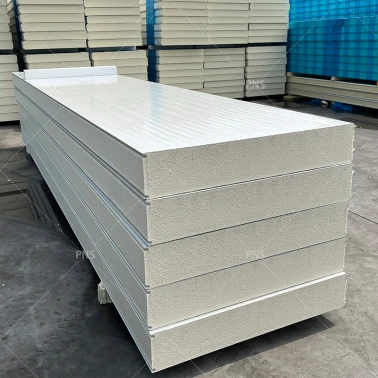

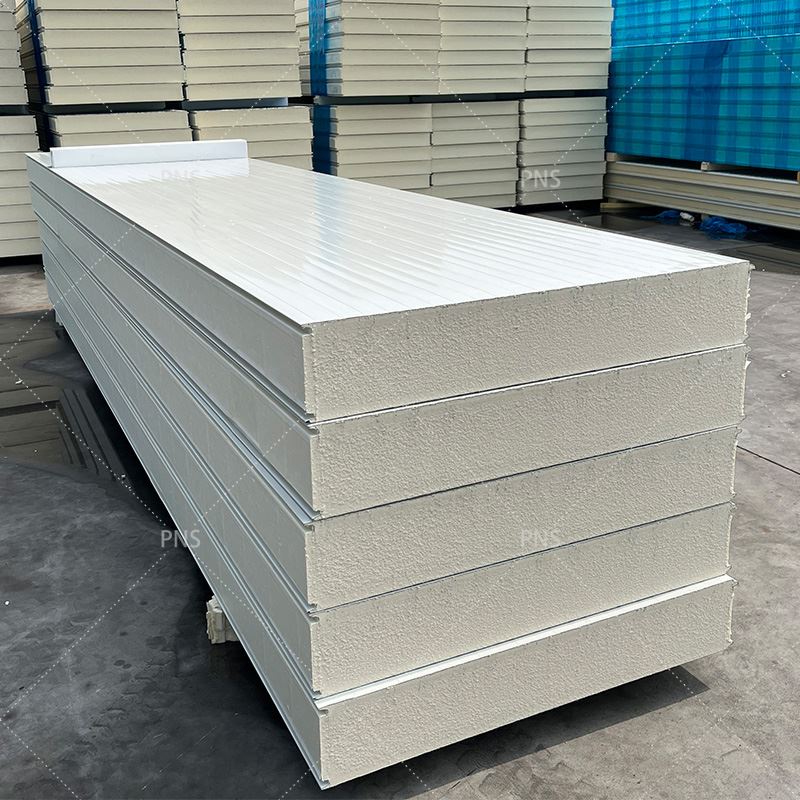
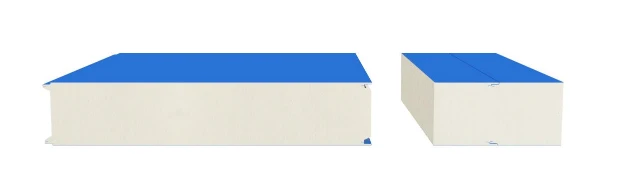
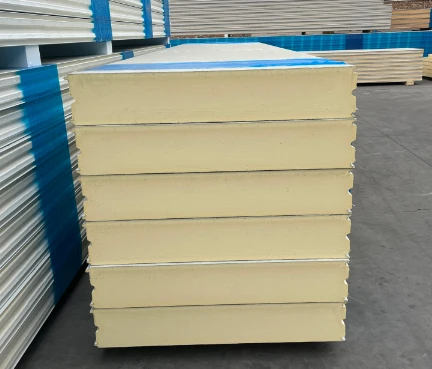
In cold storage construction, the selection of insulation materials directly impacts the energy-efficiency, service life, and operating costs of the cold storage. Currently the mainstream insulation panels in the market are PIR cold storage panels and PUR cold storage panels. Although both belong to the polyurethane-based materials, there are significant differences in their performance, cost, and application scenarios.
Ⅰ. Material Characteristics and Production Processes
1.PIR Cold Storage Panels
PIR(Polyisocyanurate) represents an upgraded version of PUR materials. By adjusting the formulation to increase the proportion of isocyanate and introducing a trimerization reaction, a more stable chemical structure is formed.
PIR cold storage panels are manufactured using the world's most advanced fourth-generation fully automatic continuous production line for polyurethane sandwich panels and Italian OMS foaming equipment. Through high-pressure and high-temperature automatic continuous foaming, the entire foaming process is uniform. Compared with PUR cold storage panels, PIR cold storage panels have a lower thermal conductivity. The density measured at various points is basically consistent, with a closed-cell rate of over 98%. They offer better thermal insulation and fire-resistance performance.
Features: It has a higher closed-cell rate (exceeding 95%), a lower thermal conductivity(approximately 0.018-0.022W/(m·K)). Meanwhile, it exhibits stronger high-temperature resistance (able to withstand temperatures above 200℃) and fire-prevention performance (meeting Class A fire-retardant standards).
2.PUR Cold Storage Panels
PUR(Polyurethane) is a foamed material produced through the reaction between isocyanates and polyols. With a well-established production process, the closed-cell structure formed during the foaming process can effectively insulate heat transfer, endowing it with excellent thermal insulation properties.
PUR cold storage panels are manufactured using the world's most advanced fourth-generation fully automatic continuous production line for polyurethane sandwich panels and Italian OMS foaming equipment. Through high-pressure and high-temperature automatic continuous foaming, the entire foaming process is uniform, resulting in a stable thermal conductivity. The density measured at various points is basically consistent, with low water absorption. These panels exhibit high compressive strength and tensile strength, are resistant to deformation, and offer excellent thermal insulation performance.
Features: Low density and low thermal conductivity (approximately 0.022-0.028W/(m·K)), exhibiting excellent thermal insulation performance. However, its high-temperature resistance and fire-prevention capabilities are relatively weak (usually with a B1-level flam retardancy).
Ⅱ. Technical Standards
1. Technical Standards Commonly Adopted for PIR Cold Storage Panels
|
Serial number |
Project |
Unit |
Technical requirements |
|
|
1 |
Density |
Kg'/㎡ |
45±2 |
|
|
2 |
Thermal conductivity |
W/m·k |
≤0.022 |
|
|
3 |
Compressive strength |
Kpa |
≥160 |
|
|
4 |
Combustion performance |
-- |
B1 level |
|
|
5 |
Bonding strength between the core layer and the face sheet of sandwich panels |
Mpa |
>0.1 |
|
|
6 |
Stripping quality |
The core material bonded to the face material |
-- |
Should be evenly distributed |
|
The bonding area of each peeling surface |
-- |
≥90% |
||
|
7 |
External steel plate |
Thickness |
mm |
0.4~0.8 |
|
Coating |
-- |
HDP/SMP/PE |
||
|
8 |
Internal steel plate |
Thickness |
mm |
0.4~0.6 |
|
Coating |
-- |
HDP/SMP/PE |
||
2. Technical Standards Commonly Adopted for PUR Cold Storage Panels
|
Serial number |
Project |
Unit |
Technical requirements |
|
|
1 |
Density |
Kg'/㎡ |
45±2 |
|
|
2 |
Thermal conductivity |
W/m·k |
≤0.024 |
|
|
3 |
Compressive strength |
Kpa |
≥160 |
|
|
4 |
Combustion performance |
-- |
B2 level |
|
|
5 |
Bonding strength between the core layer and the face sheet of sandwich panels |
Mpa |
>0.1 |
|
|
6 |
Stripping quality |
The core material bonded to the face material |
-- |
Should be evenly distributed |
|
The bonding area of each peeling surface |
-- |
≥90% |
||
|
7 |
External steel plate |
Thickness |
mm |
0.4~0.8 |
|
Coating |
-- |
HDP/SMP/PE |
||
|
8 |
Internal steel plate |
Thickness |
mm |
0.3~0.6 |
|
Coating |
-- |
HDP/SMP/PE |
||
Ⅲ. Economic Analysis and Cost Assessment
1.Initial Costs
The production process of PUR cold storage panels is well-established, and the raw material costs are relatively low. As a result, their prices are typically 10%-20% lower than those of PIR cold storage panels, making them suitable for projects with limited budgets.
2. Long-term Costs
PIR cold storage panels can reduce the energy consumption of cold storage facilities by approximately 15%-30% due to their higher thermal insulation efficiency. Meanwhile, they feature strong durability and low maintenance frequency, presenting more advantages in terms of the comprehensive cost over the entire lifecycle.
3.Additional Costs for Special Scenarios
If a cold storage facility needs to pass the acceptance inspection for a high fire-protection rating (such as a chemical cold storage), an additional fire-resistant coating is required for PUR panels. In contrast, PIR panels can directly meet the requirements, thereby further reducing costs.
Ⅳ. Applicable Scene
1. Applicable Scenarios of PUR Cold Storage Panels
Conventional food cold storage facilities(ranging from 0℃~-25℃), temporary cold storage units for short-term use, and ordinary storage environments with relatively low fire-prevention requirements.
2. Applicable Scenarios of PIR Cold Storage Panels
Ultra-low temperature cold storage (below -60℃), pharmaceutical cold storage (requiring constant temperature and humidity), chemical or hazardous goods cold storage (with relatively low fire prevention requirements), and cold storage in high-humidity areas (with strong anti-moisture requirements).
In the current context where the cold-chain logistics industry is experiencing rapid growth while there is a concurrent demand for energy conservation and consumption reduction, the selection between PIR and PUR cold storage panels is not merely a matter of choosing between material technologies. Instead, it represents a comprehensive consideration of the functionality, safety, and economic viability of cold-storage facilities.
Thanks to its well-established manufacturing processes and cost advantages, PUR remains a reliable choice for traditional cold storage facilities. On the other hand, PIR, with its superior energy-efficiency ratio, environmental friendliness, and fire-resistance properties, emerges as the preferred solution for high-standard, long-term operational scenarios. Regardless of the material selected, the key lies in basing decisions on actual requirements and striking a balance between short-term investment and long-term returns.
In the future, with the iteration of green refrigeration technologies, the upgrading of cold storage panels will continue to propel the industry towards greater efficiency and lower carbon emissions. End-users can maximize the efficiency of cold storage facilities by implementing customized solutions tailored to their specific requirements.
Hot Tags: the difference between pir cold storage panels and pur cold storage panels, China the difference between pir cold storage panels and pur cold storage panels manufacturers, suppliers, factory, 200mm cold storage sandwich panel