



In recent years, the global housing market has witnessed a surge in demand for flexible, cost-effective, and sustainable living solutions. Among the most sought-after options are expandable tiny house, container expandable home, and flat pack house-three innovative concepts that redefine modern compact living. These dwellings cater to diverse needs, from minimalist individuals and young families to those seeking temporary or mobile housing, blending functionality with environmental consciousness.
A expandable tiny house is a downsized residential structure designed to maximize space efficiency while retaining essential living functions. Unlike traditional tiny homes with fixed dimensions, its defining feature is the ability to expand-often via sliding, folding, or telescoping mechanisms-to create extra room when needed. For example, a 20-square-meter basic unit can expand to 40 square meters or more, accommodating guests, home offices, or additional storage. This flexibility makes it ideal for urban dwellers facing space constraints or those who desire a mobile lifestyle without sacrificing comfort.

The expandable tiny house also shines in sustainability. Most models use eco-friendly materials, require less energy for heating and cooling, and have a smaller carbon footprint compared to conventional houses. Whether parked in a tiny home community or a rural backyard, it offers a cozy, low-maintenance lifestyle that aligns with the growing trend of conscious consumption.
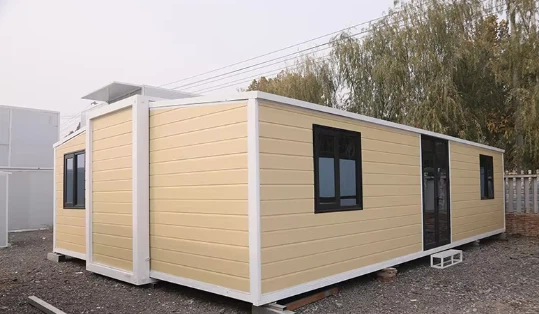
Derived from repurposed shipping containers, the container expandable home has emerged as a bold and sustainable housing option. Shipping containers are durable, weather-resistant, and readily available, making them an affordable base material. The expandable design takes this advantage further: by adding foldable or extendable sections, a standard 20-foot or 40-foot container can be transformed into a spacious living space with bedrooms, a kitchen, and a bathroom.
Beyond practicality, the container expandable home boasts unique industrial aesthetics. Its sleek metal exterior can be customized with paint, cladding, or greenery, blending seamlessly with urban or rural environments. Additionally, repurposing shipping containers reduces waste, as each container reused diverts tons of steel from landfills. This eco-friendly approach, combined with quick construction times and low costs, has made it popular among adventurers, off-grid enthusiasts, and even developers building affordable housing projects.
A flat pack house, also known as a prefabricated flat-pack home, is delivered in flat, compact packages with pre-cut, pre-drilled components. Its greatest appeal lies in simplicity and convenience-most models can be assembled on-site in days or weeks by a small team, eliminating the need for complex construction equipment or specialized skills. From small cabins to multi-bedroom homes, the flat pack house offers diverse designs to suit different needs and budgets.
This type of housing is particularly popular for remote areas, emergency shelters, or temporary accommodations, as it can be transported easily via trucks, ships, or even planes. Modern flat pack house models also prioritize energy efficiency and durability, with options for insulation, solar panel integration, and weatherproofing. As global demand for quick, affordable, and sustainable housing grows, the flat pack house continues to gain traction as a versatile solution that bridges the gap between mobility and permanence.
Hot Tags: container expandable homes, China container expandable homes manufacturers, suppliers, factory


