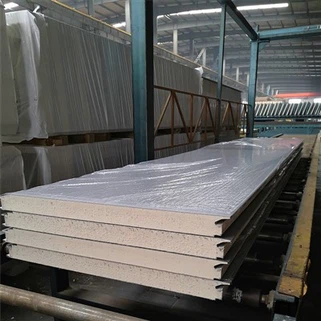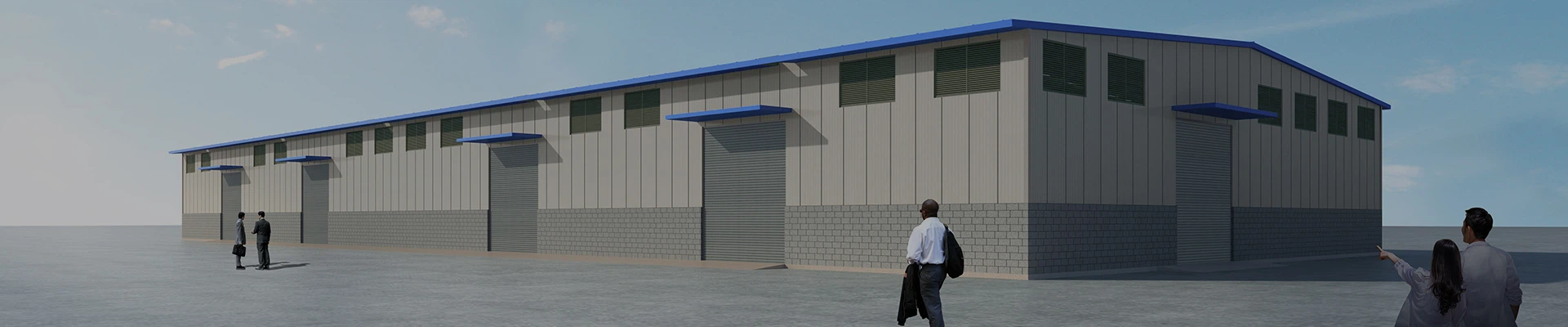


Prefab house cost refers to the total amount of various expenses incurred in the whole process of prefab houses from design, component production, transportation to on-site installation and commissioning. It is a core indicator to measure the economy of prefabricated buildings. Compared with the cost of traditional cast-in-place buildings, the composition of prefab house cost is more concentrated in the industrialized production link, which also gives it unique advantages in cost control. Clarifying the constituent elements of prefab house cost is of great significance for developers to formulate investment plans, constructors to optimize construction schemes and homebuyers to evaluate home purchase costs.
Component technology affects the prefab house cost
Component production technology is the primary technical factor affecting prefab house cost. The production precision and automation level of prefabricated components directly determine the level of basic costs: if high-precision molds are used with automated production lines, although the standardized quality of components can be greatly improved, the investment in early equipment procurement and commissioning is relatively high, which will increase the prefab house cost in the early stage of the project; on the contrary, if simple production technology is selected, although the equipment investment cost can be reduced, it may lead to rework losses during installation due to insufficient component precision, or increased maintenance costs during later use, which will eventually increase the overall prefab house cost instead.
Material affects the prefab house cost
The selection of building materials is the basic material factor determining prefab house cost. The price difference of materials of different types and specifications is directly transmitted to the overall cost: traditional reinforced concrete prefabricated components have relatively stable costs due to easily available raw materials and mature production technology, which have little impact on the fluctuation of prefab house cost; while the application of new materials such as light steel and composite thermal insulation will make the cost fluctuate synchronously with the market unit price of materials. Taking environmentally friendly thermal insulation materials as an example, their use will increase the prefab house cost per unit area by 5%-10%, but from a long-term perspective, they can significantly reduce energy consumption expenses during the building use stage, forming an economic balance of early incremental cost and later energy-saving benefits.
transportation and installation affect the prefab house cost
As a key link connecting production and delivery, transportation and installation conditions also have an undeniable impact on prefab house cost. In the transportation link, the transportation distance of prefabricated components is directly related to logistics costs. In particular, large components such as wall panels and beam columns require special vehicles for transportation. The fuel consumption, tolls and component protection costs during long-distance transportation will significantly increase the prefab house cost; in the installation link, conditions such as the flatness of the construction site and the accessibility of hoisting equipment directly affect the construction efficiency - if the site flatness is insufficient and requires additional trimming, or the hoisting equipment cannot reach the operation point directly, it will prolong the construction period and increase labor costs, thereby leading to the rise of prefab house cost.
purchasing quantity affects the prefab house cost
Under the background of large-scale development, the advantage of prefab house cost has gradually become prominent. On the one hand, industrialized mass production has significantly reduced the unit production cost of prefabricated components. According to statistics, when the annual production capacity of prefab houses reaches more than 1,000 units, the prefab house cost can be reduced by 10%-15% compared with traditional buildings; on the other hand, the construction period is shortened by 30%-50%, which reduces the capital occupation cost and labor cost, and further optimizes the overall cost structure.
conclusion
From the perspective of market trends, with the advancement of green building policies and the maturity of prefabrication technology, the controllability of prefab house cost will be further enhanced. The research and development of new materials and the upgrading of production processes will make the cost composition more reasonable; the popularization of modular design will realize the generalized production of components of different house types, further reducing the prefab house cost. In the future, the competitiveness of prefab house cost will become the core driving force for its wide application in residential buildings, industrial workshops and other fields.
Hot Tags: prefab house cost, China prefab house cost manufacturers, suppliers, factory, Glass Wool Sandwich Wall Panels, exterior panel wall