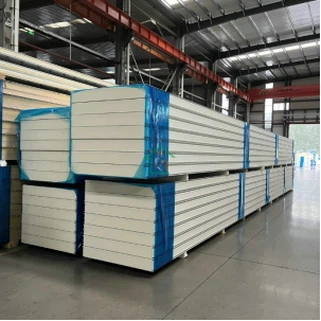


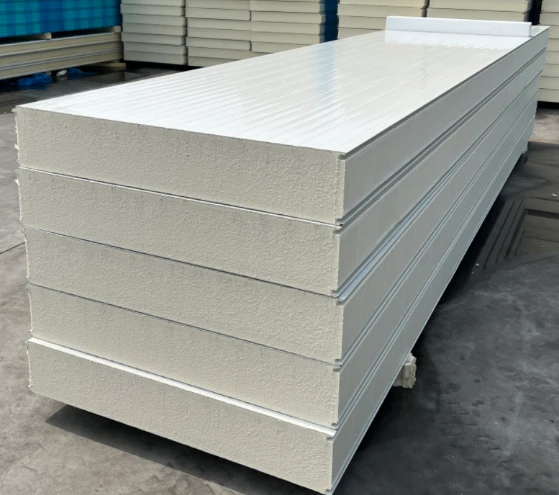
We recently worked on a seafood processing cold storage project, which features low-temperature processing, quick-freezing, and refrigeration facilities tailored specifically for aquatic products and seafood. The storage facility is constructed using five-sided insulated panels, with the walls and ceiling insulated using 150mm thick PU sandwich panels.
Due to the frequent rinsing required for seafood processing, the storage facility is exposed to a highly saline and corrosive environment. The customer requested that both the sandwich panel facings and accessories be made of stainless steel. However, after providing a price quote, the customer found that the cost of stainless steel panels was too high and exceeded their budget. We therefore recommended using aluminum-zinc-coated steel sheets with a PVDF fluorocarbon resin coating.
Aluminum-zinc-coated steel sheet is a corrosion-resistant substrate produced by applying an aluminum-zinc alloy coating to the surface of cold-rolled steel sheet via a hot-dip galvanizing process; it is commonly referred to in the industry as AZ (aluminum-zinc) coated steel. The standard alloy composition is: 55% aluminum + 43.5% zinc + 1.5% silicon. Function of aluminum: Forms a dense oxide film that isolates the steel from air, moisture, and salt fog, providing passive corrosion protection (barrier protection). Function of zinc: Provides sacrificial anode protection, automatically preventing rust at cuts and scratches on the steel sheet and stopping rust from spreading. Function of silicon: Improves coating adhesion, prevents coating peeling, and enhances high-temperature resistance and bendability.

PVDF Fluorocarbon Resin Coating: Short for polyvinylidene fluoride resin, this fluorinated polymer material is currently the highest-grade topcoat for metal color-coated sheets, offering the strongest weather resistance and corrosion resistance. It offers exceptional resistance to salt spray and corrosion, with salt spray resistance exceeding 5,000 hours. It withstands: seawater salt spray, ammonia in seafood cold storage, high-humidity condensation, and disinfectant solutions containing acids and alkalis. It exhibits excellent resistance to both high and low temperatures, with an operating temperature range of -50°C to 120°C. It is self-cleaning and easy to rinse; its dense surface does not absorb oil or dust, and rainwater washes it clean instantly.
Based on a comprehensive analysis, the combination of a PVDF fluorocarbon resin coating and aluminum-zinc-coated steel sheets offers significant resistance to corrosion from seafood salt, moisture, and ammonia, making it well-suited for seafood processing cold storage facilities. The price is also reasonable, and customers are quite satisfied. Upon reviewing the project, we noted that since it is used for seafood processing, the cold storage panels not only provide insulation but also function as cleanroom panels, offering dust-proofing, antibacterial properties, ease of cleaning, and high corrosion resistance. After reflection, we recommend using curved aluminum corner guards for inside corners, as they are easier to clean and more antibacterial than folded corner pieces, making them more suitable for this seafood processing cold storage project. A schematic diagram is shown below.

Hot Tags: sandwich panels for seafood processing cold storage, China sandwich panels for seafood processing cold storage manufacturers, suppliers, factory, 200mm cold storage sandwich panel