

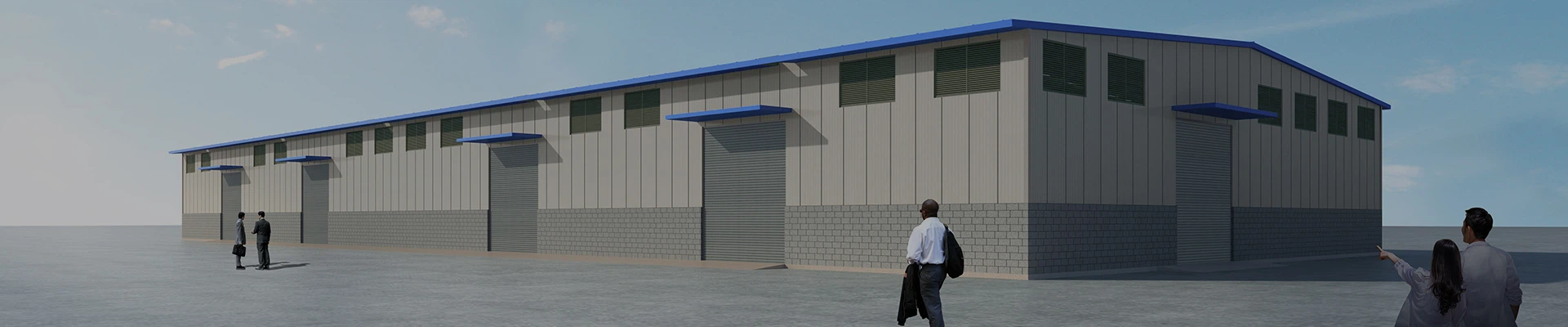
Polyurethane Sandwich Panel (PU Sandwich Panel for short) is a new type of environmentally friendly composite panel made of rigid polyurethane foam as the core material and color steel plate, aluminum plate, FRP, etc. as the surface layer through advanced composite technology. As one of the most widely used product systems of polyurethane materials, it has become a core building material in many fields such as construction, cold chain, and transportation due to its excellent comprehensive performance, promoting the industry to develop in the direction of energy saving, lightweight and modularization.
Product Structure and Core Characteristics
The polyurethane sandwich panel adopts a typical "sandwich" three-layer structure, with rigid polyurethane foam as the middle core layer and surface materials such as color steel plate as the upper and lower layers. The three are closely compounded through special adhesives to form an integral force-bearing unit, which not only retains the advantages of each component but also achieves performance complementarity. Its core characteristics are mainly reflected in the following aspects:
1. Excellent thermal insulation performance
The rigid polyurethane foam core has an extremely low thermal conductivity, usually between 0.017~0.028 W/(m·K), and the closed-cell rate is as high as 90% or more. It is a hydrophobic material that will not increase thermal conductivity due to moisture absorption, and its thermal insulation effect is more than twice that of traditional thermal insulation materials. This characteristic enables the polyurethane sandwich panel to effectively reduce the energy loss of buildings or facilities, reduce heating and cooling energy consumption, and conform to the current development concept of green energy saving. It can play an excellent role both in building insulation in cold regions and in heat insulation needs in high-temperature environments.
2. Light weight, high strength and stable structure
The overall density of the polyurethane sandwich panel is relatively light, about 70% lighter than traditional brick or concrete walls, which can greatly reduce the self-weight of the building structure and the foundation bearing pressure, and is also convenient for transportation and installation. However, light weight does not affect its strength. Its flexural bearing capacity and bond strength all meet industry standards, with bond strength not less than 0.09MPa, and flexural bearing capacity not less than 0.5Kn/m² when the deflection is 1/200 of the support spacing. It can meet the force requirements of the building envelope, is not easy to deform or crack, and has strong structural stability.
3. Flame retardant and fireproof, safe and reliable
By adding special flame retardants, the combustion performance of the polyurethane sandwich panel can reach grade B1 or above, which is a flame-retardant and self-extinguishing material. Its softening point is as high as 250℃ or more. When burning, a carbon layer will be formed on the foam surface, which effectively isolates the spread of flame and does not produce harmful gases, ensuring safe use. At the same time, some products can reach higher fire resistance levels according to needs, meeting the safety requirements of different scenarios, and are widely used in industrial plants, warehouses and other places with strict requirements on fire performance.
4. Easy construction and cost-effective
The polyurethane sandwich panel is produced by prefabrication with various specifications. The length can be customized (up to 18 meters), the thickness range is 20mm~150mm, and the width is usually 1000mm or 1200mm. It has high cutting precision, and the thickness error can be controlled within ±0.5mm. On-site installation does not require complex procedures and can be directly spliced. The installation speed is more than 70% faster than traditional masonry, which can greatly shorten the construction period and reduce labor costs. Although its unit price is slightly higher than that of traditional thermal insulation materials, long-term use can offset the initial investment through energy saving and consumption reduction, with outstanding comprehensive cost performance.
5. Strong weather resistance, long service life
The surface material of the polyurethane sandwich panel has undergone anti-corrosion treatment, which can effectively resist ultraviolet radiation, wind and rain erosion, and chemical corrosion. The core material has good freeze-thaw resistance and mold resistance, with a wide range of service temperature, and can be used normally between -50℃ and 120℃. Under normal use and maintenance conditions, its service life can reach more than 30 years, without frequent replacement, which greatly reduces the later maintenance cost.
Wide range of applications
With the above excellent characteristics, the application field of polyurethane sandwich panels is constantly expanding, and it has penetrated into many industries such as construction, cold chain, transportation, and agriculture, becoming an important material to promote the upgrading and development of various fields:
1. Construction field
This is the most important application field of polyurethane sandwich panels, which are widely used in the external walls, roofs and partitions of industrial plants, logistics warehouses, shopping centers, prefabricated houses, purification projects, etc. It integrates load-bearing, thermal insulation, fire prevention and waterproofing, without secondary decoration, which not only improves the energy-saving performance of the building but also beautifies the building appearance. At the same time, it adapts to the development needs of steel structure buildings and becomes the preferred material for the steel structure building envelope system. In addition, it can also be used in scenarios such as thermal insulation under indoor floor heating systems and thermal insulation of air supply systems under machine room floors.
2. Cold chain logistics field
The excellent thermal insulation performance of polyurethane sandwich panels makes them the core material of cold chain logistics facilities, used in the production of cold storage, refrigerated vehicles, refrigerated containers, etc. It can effectively maintain a low-temperature environment, reduce cold loss, ensure the quality and safety of perishable goods such as fresh food and medicine, reduce cold chain operation costs, and promote the standardized development of the cold chain logistics industry. At the same time, it can also be used in the production of thermostats and refrigerators to meet different low-temperature storage needs.
3. Transportation and aerospace industry
In the field of transportation, polyurethane sandwich panels are used for interior panels, sound insulation panels and thermal insulation panels of trains and ships, providing a comfortable riding environment and good sound insulation and thermal insulation effects; in the aerospace field, their lightweight and high-strength characteristics can be used to make aircraft interior components, reduce the weight of the aircraft body, and improve flight efficiency. In addition, it can also be used in the production of highway sound insulation walls to reduce traffic noise pollution.
4. Agricultural field
It is used to make agricultural greenhouses, livestock breeding sheds and other facilities, which can effectively adjust the indoor temperature and humidity, provide a stable environment for crop growth and livestock breeding, and improve agricultural production efficiency. Its weather resistance and corrosion resistance can adapt to the complex outdoor natural environment and extend the service life of agricultural facilities.
5. Other field
In addition to the above fields, polyurethane sandwich panels can also be used for industrial equipment insulation (such as cooling towers, storage tanks, pipeline insulation), building decoration (ceilings, wall panels), thermal insulation interlayers of metal doors, thermal insulation layers of solar heat collection systems, etc. The application scenarios are constantly enriched, and the market demand is growing continuously.
Development Trends and Prospects
With the in-depth advancement of the global green and low-carbon concept and the transformation and upgrading of the construction industry, polyurethane sandwich panels, as a new type of high-efficiency and energy-saving building materials, have broad development prospects. In the future, the industry will develop in three directions: first, green and environmental protection, developing fluorine-free and low-VOC polyurethane core materials to reduce environmental impact and meet green building standards; second, functional diversification, developing composite panels with multiple functions such as fire prevention, sound insulation, antibacterial and radiation protection to meet the personalized needs of different scenarios; third, modular integration, combining the development of prefabricated buildings, promoting the in-depth integration of polyurethane sandwich panels with steel structures and prefabricated components, and realizing the efficiency and standardization of building construction.
As a composite building material integrating multiple advantages, polyurethane sandwich panels not only solve the pain points of traditional building materials such as poor thermal insulation effect, cumbersome construction and high energy consumption, but also provide strong support for the green development of various industries. It is believed that driven by technological innovation, polyurethane sandwich panels will play an important role in more fields and become the core force leading the high-quality development of the building materials industry.


